
E-Waste & Inequality
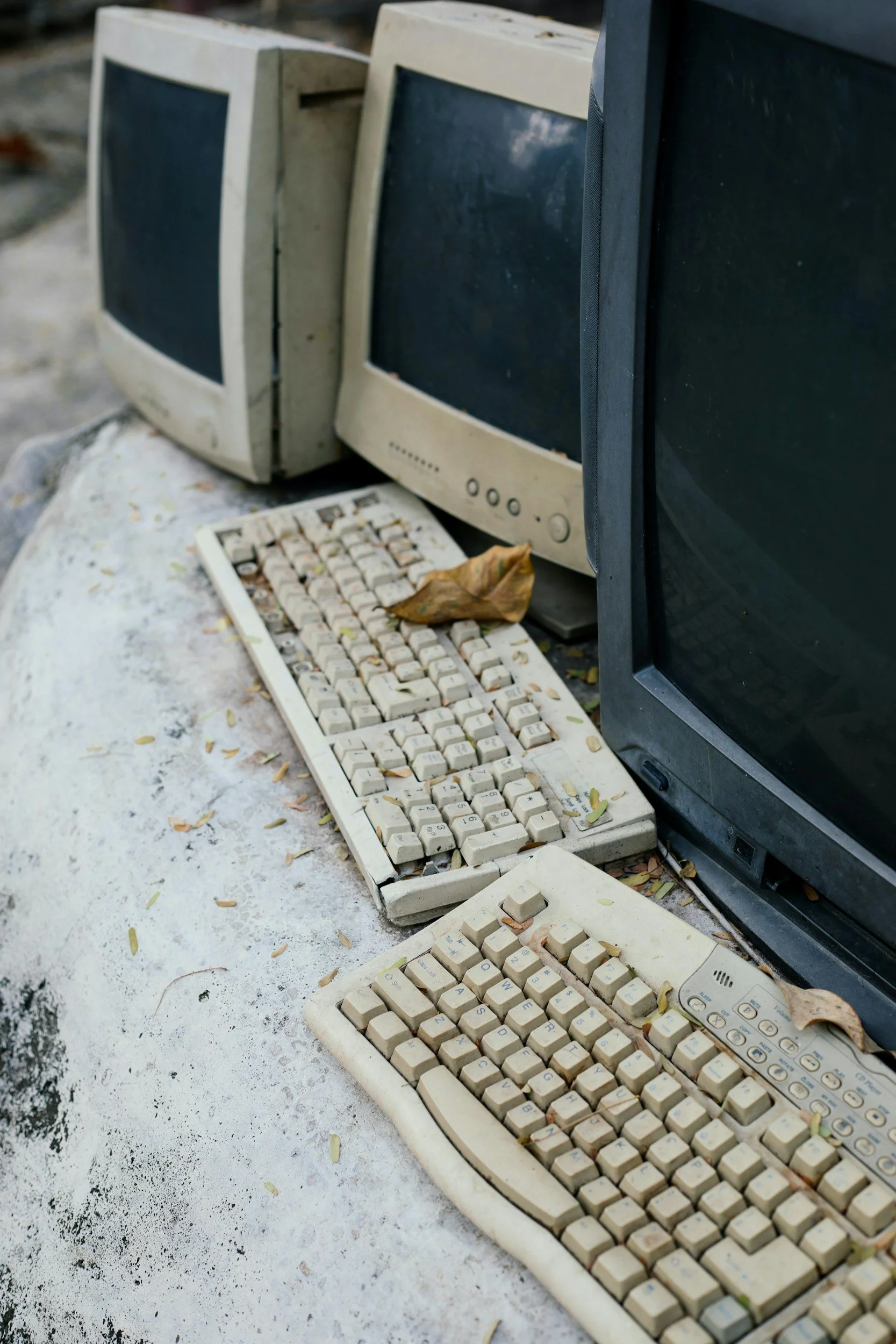
Have you ever considered how e-waste and inequality are intermingled? E-waste is a global issue and we are all a part of it. But being surrounded by an industrialized society, we don’t know what it’s like to live amongst the waste and removal of technology garbage. Part of the reason why is because a lot of the e-waste generated in the U.S. gets sent to other countries to be burned, polluting the planet and the people tasked with these jobs. Many of which typically live in marginalized communities. Inequality, gender, and caste systems play a significant role in e-waste creation and removal which results in destructive effects on communities, health and safety. Big technology companies and governments allow this to happen globally, in places like Guiyu, China, Mumbai, India and Agbogbloshie, Ghana.
Disparities:
E-waste is an inequality issue as disposal sites are typically located in areas where depressed socio-economic classes live. Because we live in a patriarchal society in a global sense, women and non-binary people have different role expectations. In these communities where e-waste is a constant part of life through being surrounded by it, being immersed in it and working around it, the job of waste disposal typically falls on the women and children of households.
As explained by Lucy McAllistor, Amanda Magee, and Benjamin Hale in Health and Human Rights' Women, E-Waste and Technological Solutions to Climate Change, "In many of these groups, women and girls are accorded a lower social status than men and boys. Women are thus disproportionately affected by the e-waste sector, since it is they who often assume the lowest-tier jobs. They are, as it were, the 'lowest of the low.' As the lowest of the low, women waste workers operate not only under the radar of many policy makers and politicians, but also in the shadows of the household" (p. 7).
When women and children are disproportionately affected by the disposal of e-waste, society as a whole has a problem. The burning of e-waste emits toxic chemicals which creates fine particulate matter as well as lead, zinc and nickel, all of which link to serious diseases and cancers. In particular, women face menstrual irregularities, reproductive and fertility issues, and for pregnant people, stillborn births, fetal developmental issues and birth defects. Not only are people affected in health through the burning of e-waste, but through the creation of technology as well. Large tech companies, such as Tesla, rely on children for labor in many countries to mine for lithium and cobalt for car batteries. While it is not only immoral to use children for labor which disrupts their childhood and possibility of education, it is extremely dangerous, as mining explosions and tunnel collapses pose serious safety risks.
Who to Hold Accountable?
The reason why these disparities occur and people suffer from long term and short term effects as well as altering their way of life is because of companies taking advantage of marginalized communities and governments allowing this to happen. With capitalism as an integral part of society, commodifying and making money off of people who are oppressed is not a moral issue for billionaires and Fortune 500 companies. Dismantling capitalism, patriarchy, and inequality is a central necessity to fixing this deeply harmful environmental issue.
Where this Happens:
E-waste is a global issue. Just the other day, I was walking along the Charles and saw computer wires near the water. But though we may understand e-waste as a concept and see it in daily life from time to time, it is nowhere near as apparent than in the areas where e-waste is intentionally dumped. The top few places where e-waste is largely disposed of are Guiyu China, Mumbai, India and Agbogbloshie, Ghana. Most of the e-waste generated globally, with the highest being China and the USA, gets sent to certain parts of India, China, Pakistan and some African countries. As discussed, this is detrimental to health and the way of life for the people in these areas, not to mention that because of the unfair conditions and subpar pay, the e-waste they are surrounded by daily are products they may have never had access to before. Yet, they have to breathe the pollution and enter jobs around burning and disposing of the waste. In Agbogbloshie, Ghana, for instance, residents there suffer greatly from chronic illness and respiratory diseases due to the poor air quality, but the job of e-waste disposal is often viewed as the only way to provide for their families.
E-waste is not only a global issue, it also poses implications at the individual level. We all use technology daily and with that comes a shared responsibility. Marginalized communities affecting health long term and short term with emphasis on detrimental effects to women and children. Government policies that cater to the bottom line rather than considering the life long impact e-waste has on the health of marginalized communities, especially women and children, must be amended. Large corporations must be held accountable for taking advantage and hurting people and their offspring. This is why environmental issues are always intersectional and affect gender, race and social systems.
